
Jewelry Design in a Premium Jewelry Studio: From Hand-Drawn Sketch to 3D Model
Jewelry design is a stage that often cannot be seen in the finished ring, necklace, or pair of earrings, yet it determines the character of the entire piece. Before the metal is melted, the stone is set, and the surface is polished, a concept is created. At first, it is very intuitive: a line, a proportion, a gesture of the hand on paper. Only later does the design gain technical precision, three-dimensional form, and its final shape.
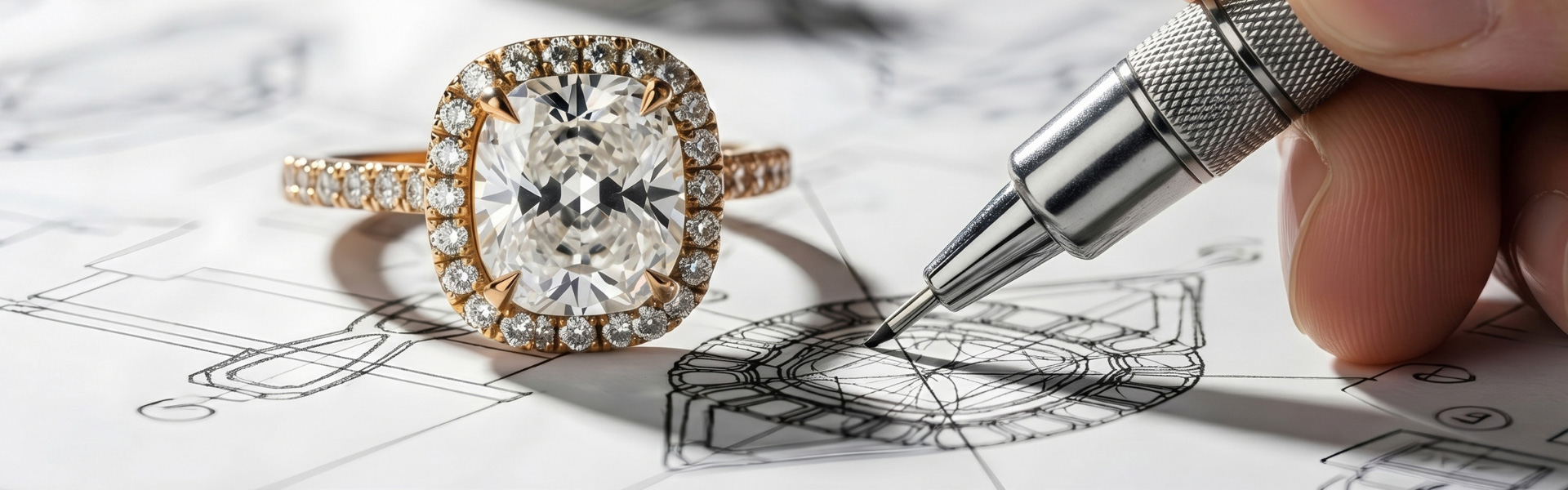
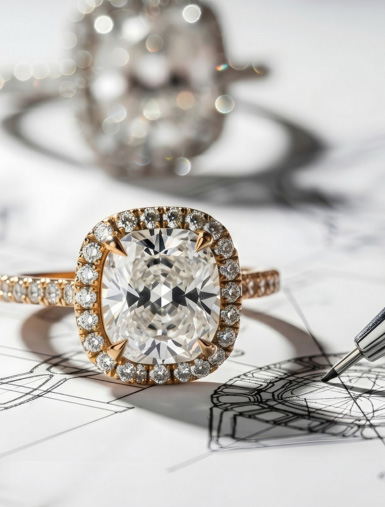
In a premium jewelry studio, we begin the design process with hand-drawn concepts. A sketch is what allows us to capture emotion, lightness of form, and the individual character of the jewelry. Technology is extremely important, but it does not replace the first design thought. It helps refine it, verify it, and translate it into an object that will be beautiful, durable, and comfortable to wear.
The Conversation: The Starting Point of Every Design
Every design begins with a conversation. In the case of custom-made jewelry, it is not only about choosing the metal or the stone. Equally important are the style of the person who will wear the jewelry, the occasion, the symbolism, and the way in which the piece is meant to function in everyday life.
An engagement ring designed to be worn every day for many years is approached differently than earrings for special occasions, or a necklace inspired by family history. At this stage, we ask about aesthetic preferences, favorite forms, the color of gold, the type of stones, but also practical details: lifestyle, comfort, the durability of the setting, and the possibility of future restoration.
In a premium studio, a design is not created from a ready-made template. It is a response to a specific person and a specific story.
Inspirations and Moodboards: Building the Aesthetic Direction
Before the actual sketch is created, we often prepare a moodboard – a visual board of inspiration. It may include photographs of jewelry, architectural details, fabric textures, gemstone colors, fragments of nature, references from art history, or elements connected with the client’s personal story.
A moodboard is not yet a design. It is more like a map of atmosphere. It helps determine whether we are moving toward classic elegance, modern minimalism, soft organic lines, vintage style, art déco, or perhaps a more sculptural and bold form.
In premium jewelry design, the moodboard is especially important because it helps avoid randomness. Every element of the design should stem from the chosen concept: the proportion of the stone, the width of the band, the type of setting, the profile of the ring, the surface texture, and the final finish.
Trends as Inspiration, Not a Ready-Made Formula
Trends in jewelry are important, but in a premium studio we approach them with caution. Custom-made jewelry should feel current, but not seasonal. It should outlast more than one trend and still look noble years later.
We observe the directions present in contemporary jewelry: the return of yellow gold, interest in colored gemstones, soft organic forms, asymmetry, unconventional engagement rings, bezel settings, vintage inspirations, and expressive statement pieces. However, we always filter trends through the client’s personality, the function of the jewelry, and the timelessness of the design.
The best design does not look like a copy of current fashion. It looks as if it has always belonged to the person for whom it was created.
Hand-Drawn Sketches: The First Language of the Design
In our studio, jewelry design begins with hand-drawn sketches. This stage is free, quick, and highly creative. On paper, we can explore many variations: a subtle change in proportion, a different arrangement of stones, the shape of a ring crown, the height of a setting, the rhythm of repeated elements, or the character of a line.
A hand-drawn sketch has something that a computer design does not yet offer: immediacy. The designer’s hand can quickly capture the mood, dynamics, and character of the jewelry. Sometimes one small detail – a softer transition between the band and the setting, a subtle narrowing of the form, a different arrangement of side stones – can completely change the perception of the design.
At this stage, several or even a dozen proposals are often created. Not all of them are final. Some serve to test the direction, others support the conversation with the client, and others become the foundation for further refinement.
Technical Drawings: Beauty Must Meet Precision
Once we have chosen the aesthetic direction, the design moves into a more technical stage. Jewelry must not only look beautiful, but also fit well, be durable, and be possible to create in a noble material.
Technical drawings help define proportions, dimensions, heights, element thicknesses, the way stones will be set, and the construction of the entire form. This is especially important in the case of rings, wedding bands, multi-stone settings, and designs with more complex geometry.
In a premium studio, aesthetics and construction are inseparable. A band that is too thin may look delicate in a drawing, but it will not provide adequate durability. A setting that is too high may beautifully display the stone, but it will not be comfortable for everyday wear. Prongs that are too delicate may seem elegant, but they will not secure the stone as they should.
That is why we analyze every design both visually and from a jeweler’s perspective.
3D Design: Translating the Concept into Spatial Form
Once the direction has been approved, the design moves into 3D modeling. This is the moment when the sketch becomes a spatial object. A 3D design makes it possible to view the jewelry from different angles, check proportions, the height of the setting, the profile of the ring, the relationship between stones and metal, and the overall form.
3D modeling is especially useful for personalized and more complex designs. It allows us to refine details precisely before the actual jewelry work begins. We can also verify whether the design is feasible, whether it maintains the appropriate material thicknesses, and whether the stones will be set correctly.
It is worth emphasizing, however, that a 3D design does not replace the designer’s hand or the jeweler’s experience. It is a tool that helps translate an artistic vision into a precise, executable design.
Renders: A Realistic Preview of the Future Jewelry
Based on the 3D model, renders can be created – realistic visualizations of the design. They allow the client to see how the jewelry will look in the chosen color of gold, with a specific stone, type of setting, and surface finish.
A render helps imagine the final effect much better than a technical drawing alone. It shows light, the shine of the metal, the color of the stones, and the overall aesthetic impression. It is especially helpful when the design is unconventional or when the client wants to compare several options – for example, white gold with yellow gold, a central diamond with a colored gemstone, or a classic setting with a more modern one.
However, it is important to remember that a render is a visualization, not finished jewelry. The real object gains depth only in the material itself: in the weight of the gold, the natural light of the stone, the hand-finished surface, and the subtle traces of craftsmanship.
3D Model
After the render is approved, we prepare a 3D model for printing, which becomes part of the design stage and technical preparation of the jewelry. This is the moment when the visual concept is translated into a precise spatial form, ready for further work in the studio. The 3D model allows us to check proportions, thicknesses, setting heights, stone arrangement, and all construction details that will matter later during gold casting. Thanks to it, we can make sure that the design not only looks good in the visualization, but is also feasible, comfortable to wear, and appropriately durable. At the Ka:ma jewelry studio, we treat the printed 3D model as an important stage between the design and the actual creation – it allows us to see the form in its real scale before the metal is cast and to refine the details that will determine the quality of the finished jewelry.
Corrections and Refining the Details
The process of designing premium jewelry is based on dialogue. After presenting sketches, drawings, renders, and 3D models, we discuss possible corrections with the client. Sometimes these are subtle changes: a thinner line, a softer profile, more delicate prongs, or a different arrangement of stones. Sometimes the design requires more substantial reworking if, during visualization, it turns out that a different direction better reflects the intended character.
This is a natural part of the process. Good jewelry is created through refinement. In premium designs, millimeters, proportions, and details matter – details that may seem minor at first glance, but in the finished object determine its elegance.
From Design to Work at the Jeweler’s Bench
Once the design is approved, the execution stage begins. Depending on the character of the jewelry, this may include preparing the model, casting, hand-finishing, soldering, stone setting, sanding, polishing, matting, engraving, or other finishing techniques.
At this stage, the design meets the experience of the craftsperson. Even the best-prepared model requires the eye and hand of a jeweler. It is the jeweler who determines the final quality of the surface, the precision of the setting, the comfort of wear, and the harmony of detail.
In a premium studio, the design process does not end when the 3D model is approved. It continues until the final polishing. Every stage influences the final result.
Why Is It Worth Designing Jewelry from Scratch?
Individually designed jewelry has exceptional value because it is not a random choice from a catalog. It is created with a specific person, their style, history, and expectations in mind. It may include symbolic details, favorite stones, family inspirations, or a form that cannot be found in any ready-made collection.
The design process makes it possible to create a one-of-a-kind object, but also one that is technically considered. Through sketches, moodboards, drawings, designs, and 3D models, the client participates in the creation of the jewelry, understands the design decisions, and sees how the initial idea gradually transforms into a finished object.
Jewelry Begins with a Line
Although contemporary jewelry uses advanced tools, in a premium studio everything begins with the simplest gesture: a line drawn on paper. It is in the sketch that the first character of the design appears. Later come the precision of the drawing, 3D technology, a realistic model, and work at the jeweler’s bench.
The result is jewelry that combines imagination, craftsmanship, and technical precision. An object that is beautiful not only because it was made from precious metal and stones, but because it was designed consciously – from the first line to the final detail.